
Concrete is one of the most widely used construction materials in the world, yet it has a natural weakness: cracking. From plastic shrinkage cracks during early curing to long-term structural stress, these issues can reduce durability and compromise the strength of concrete structures.
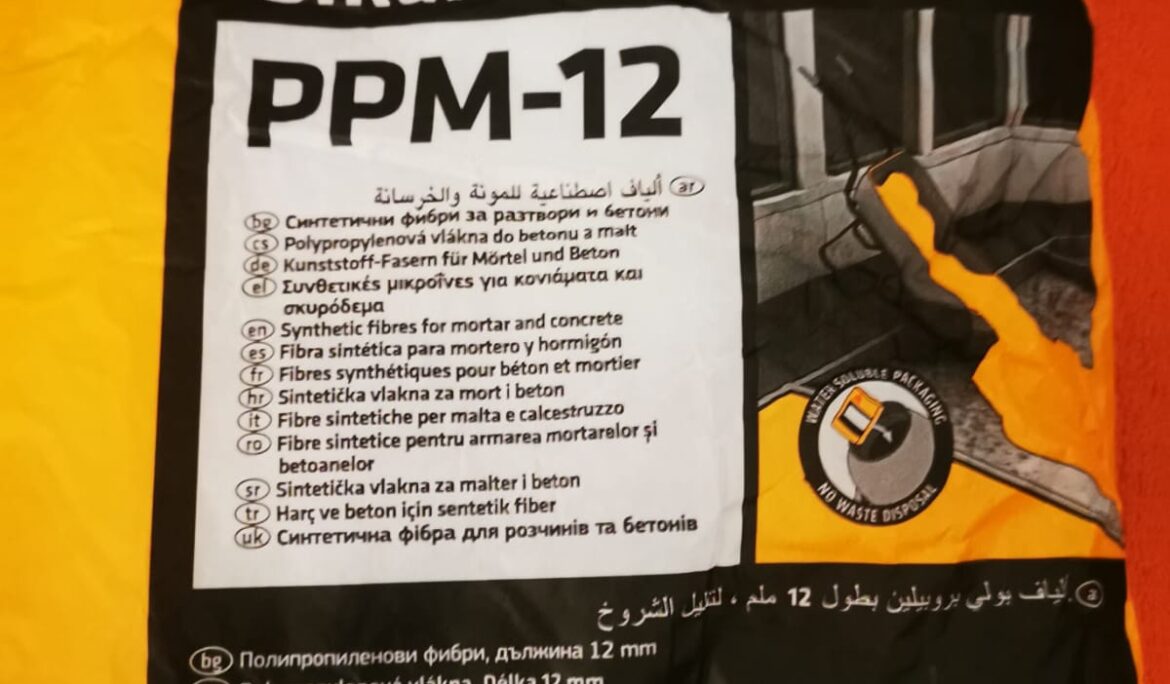
That is where polypropylene fiber reinforcement comes in. One of the most trusted solutions used by professionals is SikaFiber® PPM-12, a high-performance micro synthetic fiber designed to improve the durability, crack resistance, and overall performance of concrete.
In this guide, we will explain what SikaFiber® PPM-12 is, its benefits, and how to properly use it in concrete mixes for professional-quality results.
What is SikaFiber® PPM-12?
SikaFiber® PPM-12 is a monofilament polypropylene micro-fiber specifically engineered to reinforce cementitious materials. Manufactured by Sika AG, a global leader in construction chemicals, this fiber is added directly into concrete mixes to control plastic shrinkage cracking and improve the toughness of the finished concrete.
Unlike traditional steel reinforcement that targets structural strength, polypropylene fibers work at the micro-level, distributing themselves evenly throughout the mix to improve cohesion and durability.
These fibers are widely used in:
- Concrete slabs
- Screeds
- Plaster
- Shotcrete
- Mortar mixes
- Precast concrete
- Pavements and driveways
Benefits of Using SikaFiber® PPM-12
Before learning how to use it, it is important to understand why this fiber is popular among contractors and engineers.
1. Reduces Plastic Shrinkage Cracks
During the early stages of curing, water evaporates from fresh concrete, which can cause small cracks. Polypropylene fibers hold the matrix together, significantly reducing this cracking.
2. Improves Concrete Durability
The fibers increase resistance to:
- Impact
- Abrasion
- Surface wear
- Freeze-thaw cycles
3. Enhances Cohesion
Concrete reinforced with polypropylene fibers experiences less segregation and bleeding, leading to a more uniform mix.
4. Improves Fire Resistance
Polypropylene fibers melt at high temperatures, creating channels that allow steam to escape. This helps reduce explosive spalling during fires.
5. Reduces the Need for Secondary Reinforcement
Although not a replacement for structural steel reinforcement, fibers reduce reliance on steel mesh in certain applications, saving labor and time.
Recommended Dosage for SikaFiber® PPM-12
The typical dosage depends on the application.
Standard Dosage:
- 0.6 – 1.0 kg per cubic meter of concrete
For specialized applications such as shotcrete or heavy-duty slabs, engineers may recommend slightly higher dosages.
Always consult technical guidelines from **Sika AG before large-scale use.
Step-by-Step Guide: How to Use SikaFiber® PPM-12
Proper mixing is essential to ensure the fibers distribute evenly throughout the concrete.
1. Prepare the Concrete Mix
Begin by preparing your concrete mix as usual:
Typical components include:
- Cement
- Sand
- Aggregates
- Water
- Admixtures (if required)
Ensure the mixer is running before adding fibers.
2. Add the Fibers to the Mixer
Add **SikaFiber® PPM-12 directly into the concrete mixer.
You can add them:
- With the dry materials, or
- After adding aggregates and cement
Avoid dumping large clumps at once. Spread the fibers gradually to prevent fiber balling.
3. Allow Proper Mixing Time
Once added, mix the concrete for at least 4–5 minutes to ensure the fibers disperse uniformly.
A properly mixed fiber concrete should show no clumps or fiber balls.
4. Check Workability
Polypropylene fibers may slightly reduce workability.
If needed:
- Add a plasticizer or superplasticizer
- Adjust water content carefully
Avoid excessive water, as it weakens concrete strength.
5. Place the Concrete Normally
Fiber-reinforced concrete can be:
- Pumped
- Poured
- Screeded
- Troweled
There are no major changes required in placement procedures.
However, proper compaction using vibration will ensure a dense finish.
6. Finish the Surface
Finish the concrete surface using typical methods:
- Hand trowel
- Power float
- Steel trowel
The fibers are very fine, so they generally do not appear on the finished surface when properly mixed.
7. Cure the Concrete Properly
Good curing is still essential.
Use methods such as:
- Water curing
- Wet burlap covering
- Curing compounds
Proper curing ensures the fibers perform effectively within the concrete matrix.
Best Applications for SikaFiber® PPM-12
This fiber is particularly useful in projects such as:
Concrete Slabs
- Warehouse floors
- Residential floors
- Industrial floors
Pavements and Roads
Fibers reduce cracking caused by shrinkage and temperature changes.
Plaster and Mortar
Helps prevent shrinkage cracking in plaster coats.
Water Tanks and Reservoirs
Improves crack resistance and durability.
Precast Concrete
Used in:
- Blocks
- Panels
- Pipes
- Tiles
Common Mistakes to Avoid
Even though fiber reinforcement is simple, improper use can reduce its effectiveness.
Avoid the following mistakes:
Adding Fibers Too Late
Always add them during mixing, not after placement.
Poor Mixing
Insufficient mixing leads to fiber clumping.
Using Too Much Water
Extra water weakens the mix and reduces durability.
Incorrect Dosage
Using too little fiber reduces crack control benefits.
Fiber Reinforcement vs Steel Mesh
Many contractors ask whether fibers can replace steel mesh.
Key difference:
| Feature | Polypropylene Fiber | Steel Mesh |
|---|---|---|
| Crack control | Excellent | Moderate |
| Structural reinforcement | Limited | High |
| Corrosion risk | None | Can corrode |
| Installation | Mixed in concrete | Placed manually |
In many applications, fibers are used together with steel reinforcement for optimal performance.
Why Contractors Trust SikaFiber® PPM-12
Products from Sika AG are widely respected in the construction industry for their quality and innovation.
SikaFiber® PPM-12 offers:
- Reliable crack control
- Easy integration into concrete mixes
- Cost-effective reinforcement
- Long-term durability
For contractors, engineers, and builders looking to improve concrete performance, polypropylene fibers provide a simple but powerful upgrade to traditional concrete technology.
Final Thoughts
Using SikaFiber® PPM-12 is one of the most effective ways to improve the durability and crack resistance of concrete. With proper dosage and mixing techniques, this high-performance polypropylene fiber helps produce stronger, longer-lasting concrete structures.
Whether you are constructing floors, pavements, plaster systems, or precast elements, incorporating fiber reinforcement into your concrete mix is a smart investment that enhances both performance and longevity.
